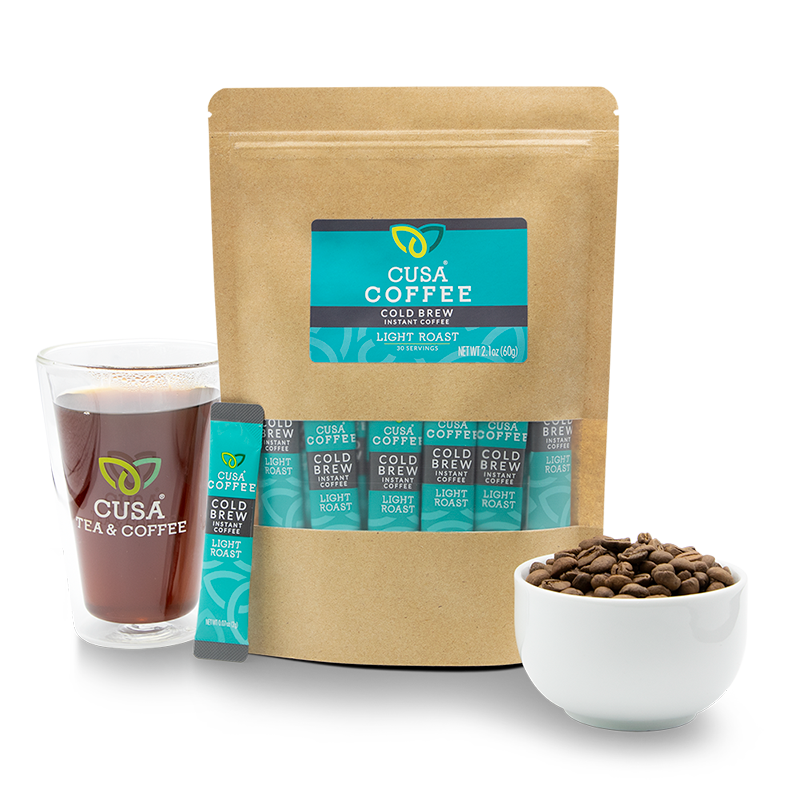
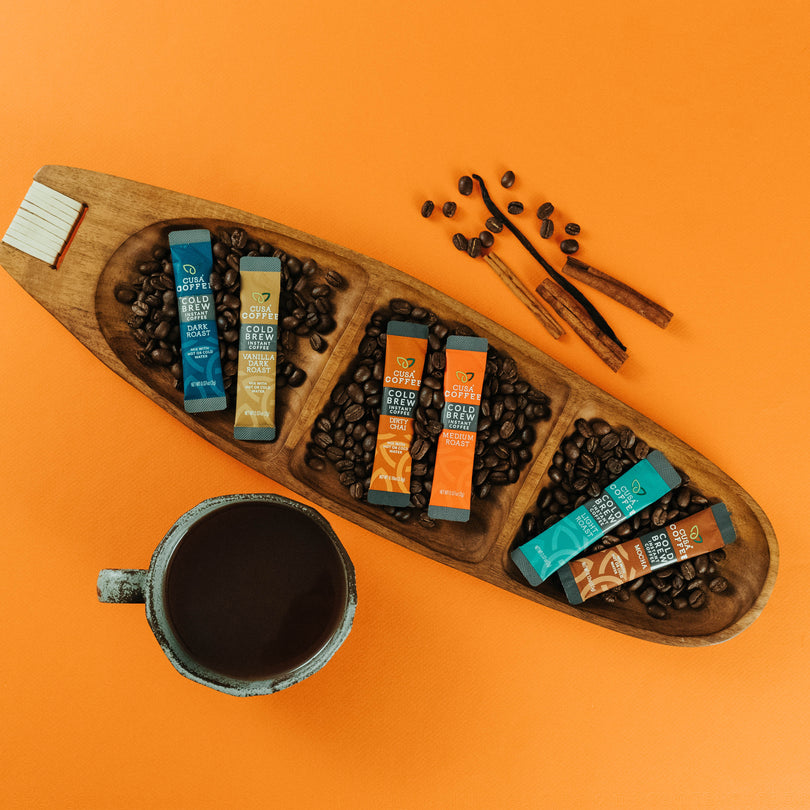
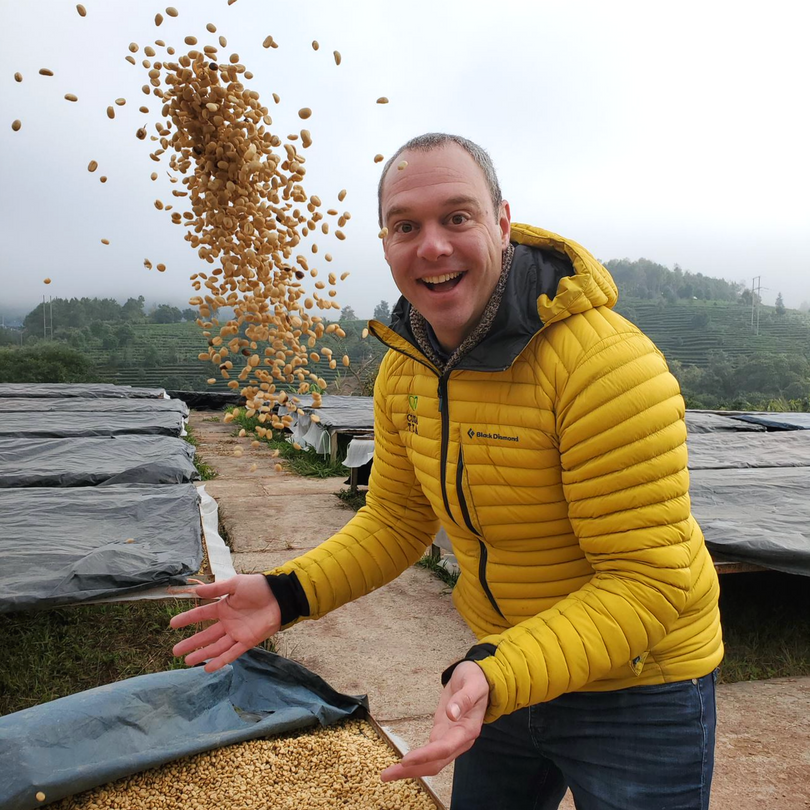

If you've ever wandered down the coffee aisle, you've probably seen the term "Arabica" on plenty of labels. But what does it actually mean, and why does it matter for your morning cup? More importantly, why do we at Cusa insist on using 100% Arabica beans when plenty of other instant coffee brands mix in cheaper alternatives?
The answer comes down to flavor, quality, and the kind of coffee experience we believe you deserve. Whether you're brewing a hot cup at home or mixing up an iced coffee on a trail, the beans matter. Let's break down what makes Arabica coffee special, how it differs from other types of coffee, and why we've built our entire product line around these premium beans.
Arabica vs. Robusta: The Two Main Coffee Species
When it comes to commercial coffee production, there are really only two species that dominate the market. Arabica and Robusta. These aren't just different brands or roasting styles. They're entirely different plants with distinct flavors, growing conditions, and chemical compositions.
Arabica coffee accounts for about 60 to 70% of the world's coffee production. It grows best at higher elevations, typically between 2,000 and 6,000 feet above sea level, in regions with mild temperatures and plenty of rainfall. The plants are more delicate, more susceptible to pests and disease, and require more careful cultivation. All of that extra effort translates into a smoother, more complex flavor profile with bright acidity and a wide range of taste notes. Think fruity, floral, nutty, chocolatey. Arabica beans can express an incredible variety of flavors depending on where they're grown and how they're processed.
Robusta coffee is the scrappier cousin. It grows at lower elevations, tolerates heat better, resists pests more effectively, and produces higher yields per plant. Sounds great, right? The problem is taste. Robusta tends to be bitter, harsh, and earthy, with a heavier body and almost no nuance. It also contains about twice as much caffeine as Arabica, which contributes to that bitter punch. Some coffee blends use Robusta specifically for the caffeine kick or to cut costs, but it comes at the expense of flavor. If you've ever had instant coffee that tasted burnt, rubbery, or just aggressively unpleasant, there's a good chance Robusta was involved.
At Cusa, we've never considered using Robusta. We're not interested in cutting corners or padding our caffeine numbers with beans that compromise taste. Our coffee products are built around one goal, which is delivering a smooth, delicious cup that doesn't taste like instant coffee. That means starting with the best possible raw material, which is 100% high-elevation Arabica beans.
Why Arabica Tastes Better
The flavor difference between Arabica and Robusta isn't subtle. It's night and day. And it comes down to chemistry. Arabica beans contain more lipids and sugars than Robusta, which translates to a sweeter, more balanced cup. They also have about half the caffeine, which might sound like a downside until you realize that lower caffeine means less bitterness. The result is a coffee that's naturally smoother and easier to drink without needing cream, sugar, or other additions to mask harsh flavors.
Arabica's flavor complexity is also shaped by where and how it's grown. High-elevation Arabica beans develop more slowly, which allows the sugars and oils inside the bean to mature and concentrate. The cooler temperatures at altitude help preserve delicate aromatic compounds that get lost at lower elevations. This is why specialty coffee roasters obsess over single-origin beans from specific regions. A bean grown in Ethiopia will taste different from one grown in Colombia or Guatemala, even if they're both Arabica.
Robusta lacks this complexity. It tastes like coffee in the most generic, one-dimensional sense. There's bitterness, there's a heavy mouthfeel, and there's not much else going on. For instant coffee, where flavor preservation is already a challenge, starting with Robusta is essentially giving up before you even begin.
We source our Arabica beans from a single family-owned coffee plantation that practices fully regenerative agriculture and organic farming. The farm is Rainforest Alliance Certified, which means it meets rigorous standards for environmental sustainability, worker welfare, and biodiversity protection. By sourcing from one location, we're able to maintain consistency in quality and taste across every batch. You're getting carefully selected, high-elevation, shade-grown Arabica beans that we've personally vetted for flavor and purity.
Why High Elevation Matters
You'll notice we don't just use Arabica beans. We use high-elevation Arabica beans. That distinction matters. Coffee grown at higher altitudes develops more slowly because of cooler temperatures and lower oxygen levels. This slower maturation allows the beans to develop denser cellular structures and more concentrated flavors. The sugars have more time to develop, the acids become more refined, and the overall cup quality improves.
Low-elevation coffee, even if it's Arabica, tends to be flatter and less interesting. The beans mature faster, which means less time for complex flavor development. High-elevation beans are harder to grow, more expensive to harvest, and logistically more challenging to source, but the payoff is undeniable. If you've ever had a truly exceptional cup of coffee and wondered what made it so good, there's a strong chance it came from beans grown above 4,000 feet.
Our beans are shade-grown, which is another quality marker. Shade-grown coffee plants are cultivated under a canopy of trees rather than in full sun. This mimics the natural forest environment where coffee originally evolved. The shade slows down the ripening process even further, which enhances flavor. It also protects the plants from extreme weather, reduces the need for chemical fertilizers, and supports biodiversity by preserving habitat for birds and other wildlife. Shade-grown coffee is better for the environment and better for your cup.
Why We'll Never Compromise on Bean Quality
We get asked sometimes why we don't offer a budget-friendly option made with a Robusta blend. The answer is simple. We started Cusa because we were tired of instant coffee that tasted terrible. If we're going to put our name on a product, it has to meet our own standards for what coffee should taste like. That means using the best beans we can source, even if it costs more.
Arabica beans are more expensive than Robusta. They're harder to grow, they produce lower yields, and they require more careful handling. But the difference in quality is worth every penny. When you open a packet of Cusa coffee, you're getting the same premium beans you'd find in a specialty coffee shop, just in a more convenient format. No burnt taste. No bitterness. No chalky aftertaste. Just smooth, delicious coffee that dissolves in seconds.
We've also committed to sourcing our beans from farms that practice regenerative agriculture and organic farming. This isn't just about avoiding pesticides. Regenerative agriculture actively improves soil health, sequesters carbon, and restores ecosystems. For us, using high-quality beans means considering the entire supply chain, from how the coffee is grown to how it's processed to how it ends up in your cup.
What This Means for Your Coffee Experience
At the end of the day, the reason we only use Arabica beans is because we want you to actually enjoy your coffee. Whether you're making a hot cup in the morning or mixing up an iced coffee on a hike, the experience should be satisfying. It should taste good. It shouldn't require a bunch of cream and sugar to cover up harsh flavors or bitterness.
Arabica gives us the flavor complexity, smoothness, and aromatic richness that makes coffee worth drinking. Combined with our cold-brew dehydration process, we're able to preserve those qualities in an instant format that's portable, lightweight, and ready in seconds. You don't have to choose between convenience and quality. You can have both.
So the next time you see "100% Arabica" on a coffee label, you'll know it's not just marketing fluff. It's a meaningful distinction that speaks to the quality of what's inside. And at Cusa, it's a commitment we'll never compromise on.