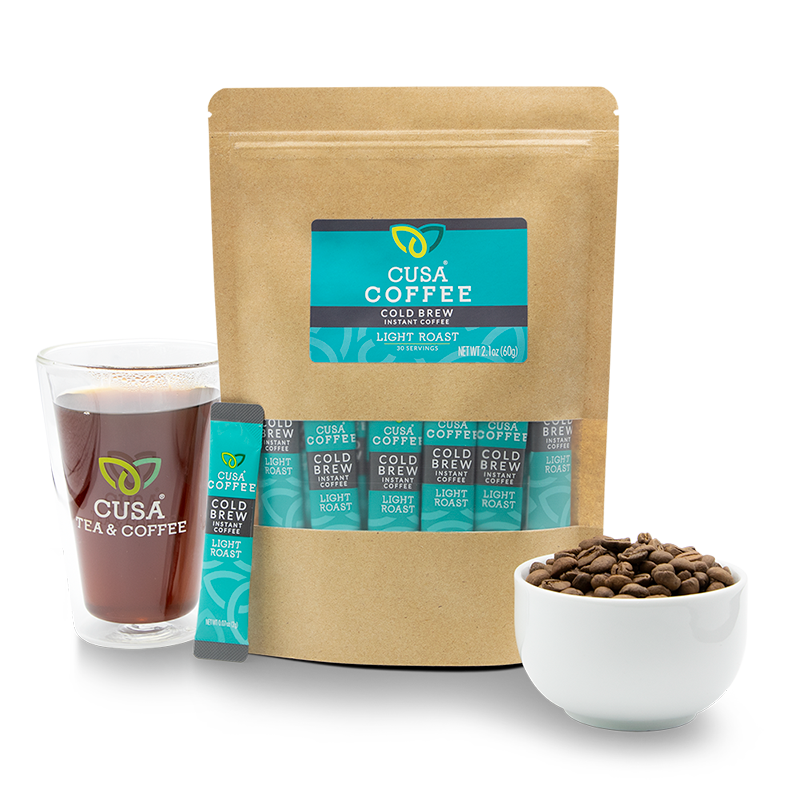





When you're scanning the instant coffee aisle, most brands focus their marketing on convenience. Quick, easy, portable. And sure, that matters. But there's a massive quality gap between instant coffees that nobody really talks about, and it all comes down to what happens between brewing and dehydrating.
Most instant coffee manufacturers take a shortcut. They brew the coffee, then immediately blast it with heat or freeze it to remove the water. What you end up with is technically instant coffee, but it's also carrying along everything that was in that brewed liquid.
We take a different approach at Cusa. After we cold brew our coffee, we run it through a membrane filtration step before dehydration. It's an extra process that costs more time and money, and most companies skip it entirely. But it makes a huge difference in what ends up in your cup.
What Is Membrane Filtration
Membrane filtration is a separation process that uses a semi permeable barrier to remove unwanted particles from a liquid. Think of it like an incredibly fine filter that catches things you can't see with the naked eye. In our case, it's removing impurities from the brewed coffee before we dehydrate it into the instant crystals you dissolve in water.
The membrane itself has microscopic pores that allow water and the desirable coffee compounds to pass through while blocking larger particles like sediment, certain oils, and any potential contaminants. It's a gentle process that doesn't involve heat or chemicals, which means we're not altering the flavor profile of the coffee. We're just making it cleaner.
Why Most Instant Coffee Skips This Step
There are two main reasons most instant coffee manufacturers don't use membrane filtration. The first is cost. Adding an extra filtration step means more equipment, more time, and more operational expenses. When you're producing instant coffee at massive scale and competing on price, every penny counts.
The second reason is that most instant coffee isn't starting with high quality beans to begin with. If you're using lower grade Robusta beans or blending in cheaper coffee, you're already working with a product that's going to taste bitter and burnt. At that point, filtering out impurities isn't going to save the flavor anyway.
We see it differently. We're starting with 100% Arabica beans from high elevation farms that practice regenerative agriculture. The membrane filtration step is about preserving that quality and making sure nothing unwanted ends up in the final product.
What Gets Removed During Filtration
When we run our cold brewed coffee through membrane filtration, we're removing several types of unwanted materials that naturally occur during the brewing process or that could be present from the growing and processing stages.
First, there's sediment. Even with high quality beans, brewing coffee creates fine particles that end up suspended in the liquid. Membrane filtration removes them completely, creating a cleaner, smoother texture.
Second, we're catching any potential heavy metals. Coffee plants can absorb heavy metals from soil and water, especially if they're grown near urban areas or in regions with environmental contamination. Our filtration step removes these contaminants before they make it into the final product.
Third, the filtration process removes any traces of mold or mycotoxins that might be present. Coffee beans are susceptible to mold during harvesting, processing, and storage. Most coffee contains at least trace amounts of mycotoxins, which are compounds produced by mold. We prefer to remove them entirely through our filtration process.
Finally, we're filtering out certain coffee oils that can contribute to bitterness or cause digestive issues for people with sensitive stomachs. This is one reason our coffee is lower in acidity compared to typical instant coffee.
How This Affects Flavor and Quality
The most obvious benefit of membrane filtration is purity. You're getting cleaner coffee without impurities that shouldn't be there. But there's also a noticeable impact on flavor and how the coffee makes you feel.
Our filtration process helps preserve the natural sweetness and complexity of the Arabica beans. When you remove the sediment and bitter oils, what's left is a smoother, more refined flavor profile. You taste the coffee itself, not the burnt or harsh notes that come from impurities. That's why people who try Cusa Coffee for the first time often say it doesn't taste like instant coffee at all.
There's also a digestive benefit. A lot of people struggle with coffee because of its acidity or because certain compounds in coffee irritate their stomach. Our membrane filtration removes some of those irritants, which is why we consistently hear from customers who couldn't drink regular coffee but can drink ours without any issues.
Testing Every Batch for Purity
Membrane filtration is a huge part of our quality control process, but it's not the only step. After filtration and dehydration, we test every batch for heavy metals, pesticides, mold, and bacteria.
This level of testing is rare in the coffee industry. Most brands do spot checks or rely on certifications from their suppliers. We want to guarantee that what you're drinking is as clean as we claim it is.
Why This Matters for Your Daily Cup
Most people just want coffee that tastes good and makes them feel good. The reason your Cusa Coffee tastes better and doesn't leave you with that burnt aftertaste is because of this extra filtration step we take.
Every choice we make is about delivering a better product. From sourcing high elevation Arabica beans to cold brewing to membrane filtration, we're obsessed with quality at every stage.
Instant coffee has a reputation for being a compromise. We're proving that doesn't have to be true. With the right process and standards, instant coffee can be just as good as anything you'd brew at home.
If you've been drinking instant coffee that tastes burnt or bitter, try our coffee and taste the difference that extra care makes.